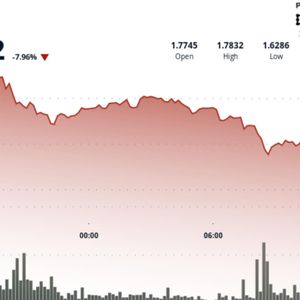
BitcoinWorld Futures Liquidated: Staggering $114 Million Wiped Out in Single Hour of Crypto Turmoil Global cryptocurrency markets convulsed on March 21, 2025, as a sudden wave of selling pressure triggered a staggering $114 million in futures contract liquidations within a single, volatile hour, signaling intense stress within leveraged trading positions. Futures Liquidated in Unprecedented Hourly Surge Major digital asset exchanges, including Binance, Bybit, and OKX, reported the massive liquidation event. Consequently, this one-hour figure contributed significantly to a 24-hour total exceeding $699 million. Market analysts immediately scrutinized the data, which reflects the forced closure of leveraged positions when traders cannot meet margin requirements. Typically, such concentrated liquidations amplify price movements, creating a feedback loop of volatility. Therefore, understanding this mechanism is crucial for assessing market health. The Mechanics of Crypto Futures Liquidation Leveraged futures trading allows investors to control large positions with relatively small capital. However, this practice carries substantial risk. Exchanges automatically liquidate a position when its value falls too close to the trader’s initial margin. This process protects the exchange from loss but can cascade. Long Liquidations: Occur when prices fall rapidly, wiping out bullish bets. Short Liquidations: Happen during sharp price rallies, squeezing bearish traders. Liquidation Cascade: A series of liquidations that drive prices further in the triggering direction. Data from Coinglass indicates the recent hour was dominated by long liquidations, suggesting a rapid price decline initiated the event. Historical Context and Market Impact Comparatively, the $114 million hourly figure ranks among the most significant events since the 2022 market downturn. For instance, during the LUNA collapse, hourly liquidations briefly spiked above $300 million. While smaller in scale, the March 2025 event highlights persistent volatility. The total 24-hour liquidation of $699 million further stresses this point. Market sentiment, as measured by the Crypto Fear & Greed Index, often plummets following these events. Subsequently, retail traders frequently reduce leverage, leading to lower trading volumes temporarily. Analyzing the Catalysts for the Sell-Off Several interconnected factors likely precipitated the liquidation wave. First, macroeconomic uncertainty surrounding interest rate decisions created a risk-off environment. Second, a large sell order on a major exchange may have triggered initial stop-losses. Third, declining Bitcoin dominance often signals altcoin weakness, increasing systemic risk. Blockchain data shows substantial transfers from exchange wallets to cold storage before the event, suggesting savvy investors anticipated turbulence. Furthermore, open interest in futures markets had reached elevated levels, indicating an overcrowded trade primed for a shake-out. Expert Perspectives on Risk Management Financial analysts emphasize the importance of risk parameters during such volatility. “Liquidation events are a stark reminder of the inherent risks in leveraged crypto trading,” notes a report from Arcane Research. Experts consistently advise using lower leverage ratios, setting appropriate stop-loss orders, and avoiding over-concentration in a single asset. Platforms now offer more sophisticated tools like partial liquidations and cross-margin modes to mitigate these risks. Regulatory bodies in multiple jurisdictions are also scrutinizing leverage limits offered to retail investors. The Ripple Effect Across Crypto Assets The liquidation pressure did not affect all assets equally. Bitcoin and Ethereum, as the largest market cap assets, saw the highest absolute value liquidated. However, several major altcoins experienced more severe percentage drops. This disparity often forces decentralized finance (DeFi) protocols to manage collateral ratios carefully. Stablecoin trading volumes typically surge during these periods as traders seek shelter. The table below illustrates the distribution across major assets during the key hour: Asset Estimated Long Liquidations Estimated Short Liquidations Bitcoin (BTC) $62M $8M Ethereum (ETH) $28M $5M Solana (SOL) $12M $2M Other Altcoins $12M $3M This data confirms the sell-off was primarily a long squeeze across the market. Conclusion The event where $114 million in futures were liquidated within one hour serves as a powerful case study in cryptocurrency market dynamics. It underscores the volatile nature of leveraged trading and its capacity to accelerate price movements. While the market absorbed the initial shock, the $699 million 24-hour total indicates sustained pressure. Ultimately, such events reinforce the need for disciplined risk management, transparent exchange practices, and investor education. Monitoring futures liquidated remains a key metric for gauging market leverage and potential vulnerability to sudden shifts. FAQs Q1: What does ‘futures liquidated’ mean? A futures liquidation is the forced closure of a leveraged derivative position by an exchange because the trader’s collateral has fallen below the required maintenance margin. Q2: Why did $114 million get liquidated in one hour? A rapid price drop likely triggered a cascade of automatic margin calls and stop-loss orders, primarily affecting over-leveraged long positions across major cryptocurrencies. Q3: How does this affect the average crypto investor? While direct impact is on futures traders, large liquidations increase volatility, which can affect spot market prices and overall market sentiment for all participants. Q4: Is a $114 million liquidation a large event? Yes, it is a significant but not unprecedented event. It indicates high leverage in the market and serves as a warning sign of potential instability during price declines. Q5: Can liquidation events be predicted? Not precisely, but high levels of open interest and funding rates in futures markets can indicate elevated risk. Sudden price movements in a leveraged market often trigger them. Q6: What should traders do to avoid liquidation? Traders should use conservative leverage, maintain adequate margin buffers, employ stop-loss orders wisely, and avoid investing more than they can afford to lose. This post Futures Liquidated: Staggering $114 Million Wiped Out in Single Hour of Crypto Turmoil first appeared on BitcoinWorld .