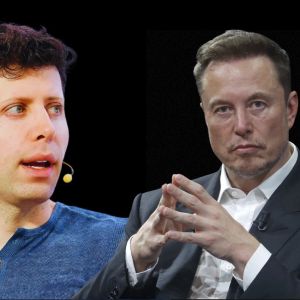
On January 30, U.S. District Judge Rita Lin in San Francisco hinted that she could reject a case filed by Elon Musk’s artificial intelligence business xAI, which accused OpenAI, Sam Altman’s competitor, of stealing trade secrets to obtain an unfair edge in the development of AI technology. Notably, it all started in September of last year, when Elon Musk’s artificial intelligence company accused OpenAI of stealing trade secrets with the assistance of workers it hired away. The xAI lawsuit alleged that three former employees, two engineers and a senior executive, disclosed source code and other company secrets after joining OpenAI. It also claimed that there was a “strategic campaign” to undermine xAI. In response, OpenAI accused Musk of running a “campaign to harass a competitor with unfounded legal claims” because xAI was unable to keep up with ChatGPT. Despite claims that several former xAI workers grabbed source code before departing, Lin stated in a four-page filing summarizing her opinions that Musk’s business did not convincingly assert that OpenAI acquired or facilitated the theft of trade secrets. Judge Lin signals potential dismissal of xAI lawsuit U.S. District Judge stated that her “tentative view” is to allow OpenAI’s move to dismiss xAI’s complaint after hearing oral arguments on February 3. Additionally, she hinted that if she rejected xAI’s case, it could change its allegations. Lin also stated that it was implausible to conclude from xAI’s lawsuit that either OpenAI utilized xAI’s trade secrets or that former xAI workers exploited them while working for OpenAI. The judge may also dismiss an unfair competition claim because xAI’s claims of poaching “all focus on poaching in service of acquiring xAI’s trade secrets and do not identify any other reason why the hiring of those employees was anticompetitive.” Against this backdrop, Lin requested that OpenAI and xAI respond to her provisional reasoning during the hearing. Musk sues OpenAI over for-profit conversion, $134 billion The ruling comes amid a larger legal dispute between Musk and OpenAI, which he co-founded. In a separate lawsuit, Elon Musk sued OpenAI CEO Sam Altman for turning ChatGPT into a for-profit business. On January 7, a U.S. district judge, Yvonne Gonzalez Rogers, in Oakland, California, ruled that the lawsuit against OpenAI will go to trial starting on April 27. The judge stated during the hearing that there was ample evidence indicating that OpenAI’s executives had promised to uphold the company’s initial nonprofit framework. She said that there were enough contested facts to allow a jury to weigh the claims rather than make the final decision at a trial in March. Following the hearing, Rogers promised to issue a written order addressing OpenAI’s bid to have the lawsuit dismissed. The legal battle is part of a larger struggle for market domination in generative AI. OpenAI and other tech companies are competing with Musk’s xAI and its chatbot, Grok. A Cryptopolitan report found that Musk demanded approximately $134.5 billion in compensation for what he called OpenAI’s “ill-gotten gains.” In a statement after the hearing, OpenAI said: “Mr Musk’s lawsuit continues to be baseless and a part of his ongoing pattern of harassment, and we look forward to demonstrating this at trial.” However, Steven Molo, the lead trial lawyer representing Musk and xAI, said after the hearing that they were eager to show the jury proof of what he called the defendants’ misconduct. Musk claimed he gave approximately $38 million (£28 million), or roughly 60% of the company’s initial investment, along with strategic direction and credibility, in exchange for promises that OpenAI would remain a nonprofit organization devoted to the public good. However, Musk went on to claim that OpenAI co-founders Altman and Greg Brockman breached that objective by restructuring the company, establishing for-profit affiliates, and striking multibillion-dollar transactions. Following Musk’s claims, OpenAI, Altman, and Brockman refuted the claims and characterized Musk as “a frustrated commercial competitor seeking to slow down a mission-driven market leader.” Microsoft, another defendant, asked Rogers to dismiss Musk’s lawsuit. There was no proof, according to a Microsoft attorney, that the corporation “aided and abetted” OpenAI. Get seen where it counts. Advertise in Cryptopolitan Research and reach crypto’s sharpest investors and builders.