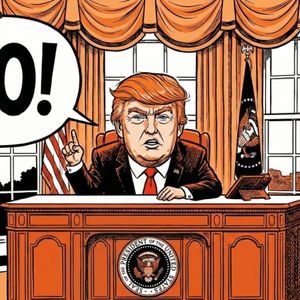
BitcoinWorld Trump FTX Pardon: Shattered Hope as Former President Vows No Clemency for Sam Bankman-Fried In a definitive statement that reverberated through financial and political circles, former U.S. President Donald Trump has publicly declared he has no intention of granting a presidential pardon to Sam Bankman-Fried, the convicted founder of the collapsed cryptocurrency exchange FTX. This announcement, reported in March 2025, effectively closes a speculative chapter for the disgraced executive currently serving a 25-year sentence for one of history’s largest financial frauds. The decision carries significant weight, signaling a firm stance on corporate accountability within the volatile digital asset sector. Trump’s FTX Pardon Stance: A Political and Legal Analysis President Trump’s unambiguous rejection of clemency for Sam Bankman-Fried arrives amidst a complex backdrop. Historically, presidential pardons for high-profile white-collar criminals have sparked intense public debate. Consequently, this declaration aligns with a broader, post-conviction narrative surrounding the FTX founder. Furthermore, legal experts note that such a preemptive statement is unusual, often occurring post-sentencing or during clemency reviews. Therefore, Trump’s position removes a significant variable from the long-term outlook of the case, potentially influencing other pending litigation and regulatory actions stemming from the FTX implosion. The scale of the fraud remains staggering. Prosecutors successfully proved Bankman-Fried misappropriated over $8 billion in customer funds. Subsequently, his 2023 conviction on seven counts of fraud and conspiracy cemented the case as a landmark for cryptocurrency regulation. As a result, the possibility of a pardon had lingered as a distant, yet potent, question for victims and observers alike. Now, that question finds a clear answer. The Collapse of FTX and Its Lasting Impact To understand the gravity of Trump’s statement, one must revisit the catastrophic failure of FTX. The exchange, once valued at $32 billion, collapsed in November 2022. Its failure triggered a “crypto winter,” evaporating market value and shattering investor trust globally. Moreover, the investigation revealed a tangled web of entities, including the hedge fund Alameda Research, which improperly used FTX customer deposits for risky ventures. The fallout was immediate and severe: Global Regulatory Scrutiny: Legislators worldwide accelerated efforts to draft comprehensive crypto asset frameworks. Investor Exodus: Retail and institutional investors pulled billions from centralized exchanges, favoring self-custody solutions. Industry Consolidation: Weaker firms folded, while established players faced unprecedented operational and compliance audits. This context makes the denial of a pardon not merely a personal decision for one individual but a symbolic affirmation of the legal consequences for such systemic failures. Expert Perspectives on Presidential Clemency in Financial Crimes Constitutional scholars and former Justice Department officials provide critical insight into this development. “A presidential pardon is an act of executive grace, but it is also a political instrument,” notes Dr. Eleanor Vance, a professor of constitutional law. “By publicly forswearing a pardon in this case, the former president is making a calculated statement about justice and deterrence in the financial technology space.” Additionally, clemency data reveals a pattern. For instance, analysis of historical pardons shows that high-profile financial criminals are less likely to receive clemency compared to those convicted of certain non-violent drug offenses, particularly when public sentiment is strongly against them. The following table contrasts key metrics: Case Type Avg. Sentence Before Pardon Consideration Public Support for Clemency (Typical) Political Risk Factor Major Financial Fraud (e.g., SBF) 5+ years served Low High Non-Violent Drug Offense (Federal) 10+ years served Moderate-High Moderate Public Corruption 7+ years served Very Low Very High Thus, the political calculus for a potential Trump FTX pardon appeared unfavorable from the outset, a reality now made explicit. The Road Ahead for Crypto Regulation and Justice Trump’s definitive stance on the FTX pardon likely influences the ongoing evolution of cryptocurrency regulation. Lawmakers can point to the finality of the sentence as evidence that existing fraud statutes possess the necessary teeth to address crypto-related crimes. Simultaneously, regulatory bodies like the SEC and CFTC continue to press for clearer jurisdictional boundaries to prevent future FTX-scale disasters. For the victims, whose claims are being processed through FTX’s bankruptcy proceedings, the statement offers a measure of certainty. The finality of the founder’s sentence may aid in the psychological closure of a painful chapter, even as the financial recovery continues slowly. Ultimately, this episode underscores a pivotal transition for the crypto industry from a perceived “wild west” to a domain where traditional legal accountability firmly applies. Conclusion Former President Donald Trump’s declaration against a Trump FTX pardon for Sam Bankman-Fried represents a significant inflection point. It reinforces the principle of legal accountability in the digital age and removes a major source of speculation surrounding one of finance’s most notorious modern cases. The decision underscores that the fallout from the FTX collapse remains a live issue, continuously shaping regulatory discourse and investor confidence. As the cryptocurrency market matures, this firm stance on justice may well be remembered as a cornerstone in establishing long-term legitimacy and trust. FAQs Q1: What exactly did Donald Trump say about pardoning Sam Bankman-Fried? According to reports, former President Trump stated clearly that he has “no intention” of granting a presidential pardon to the convicted FTX founder. This was a direct response to speculation about potential future clemency. Q2: Can a future president still pardon Sam Bankman-Fried? Yes. Any sitting U.S. president retains the constitutional power to grant pardons for federal offenses. Trump’s statement reflects his personal position, but it does not legally bind any future administration. Q3: Why is a presidential pardon for a figure like SBF such a contentious topic? Presidential pardons for individuals convicted of large-scale financial crimes that harmed thousands of ordinary people are often met with public outcry. They are viewed as tests of whether the justice system applies equally to powerful elites. Q4: How does this decision impact other crypto fraud cases? Legal analysts suggest it sets a strong precedent, signaling that even high-profile, politically connected individuals in the crypto space cannot rely on executive clemency as a likely escape from substantial sentences for fraud. Q5: Where is Sam Bankman-Fried currently serving his sentence? Bankman-Fried is serving his 25-year sentence at a federal correctional institution. Specific facility details are subject to change by the Bureau of Prisons for security and management reasons. This post Trump FTX Pardon: Shattered Hope as Former President Vows No Clemency for Sam Bankman-Fried first appeared on BitcoinWorld .

 Brace Yourself for the Next Big Crypto Wave