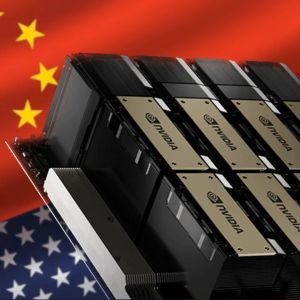
In a bid to detect and disrupt the diversion of advanced artificial intelligence (AI) chips to China, the United States government is reportedly discreetly embedding location-tracking devices in select shipments. The tactic, which just came to light, is one of the aggressive enforcement tactics Washington is putting in place since it imposed export restrictions on cutting-edge semiconductors in 2022. The location tracking is just the latest in a long line of efforts to curb Beijing’s access to technologies that have potential military applications. Covert surveillance on the AI chip supply chain The trackers are not used across all exports. Rather, they are deployed selectively on shipments under active investigation. Some of the targets include servers from US hardware makers such as Dell Technologies and Super Micro that include AI-optimized chips from Nvidia and AMD . Once placed, the trackers can transmit location data, enabling authorities to determine whether shipments arrive at their declared destinations or if they end up in prohibited locations, such as mainland China. The technology itself is not new, as US law enforcement agencies have used embedded trackers for decades in cases involving stolen goods, weapons, and narcotics. What is new is the application of these techniques to AI chips. Legislative momentum and industry pushback The US Congress and White House are reportedly working on mandating US chip firms to add location verification technology to their chips to prevent them from being shipped to blacklisted countries. China has criticized such controls, accusing the US of using “economic coercion” and warning that embedded devices could serve as “backdoors” for espionage. That was why the Chinese cyberspace regulator summoned Nvidia . While Nvidia has publicly denied that its products contain such access points, the allegation reflects increasing mistrust in US–China tech relations. For US companies, the practice poses reputational and operational risks. Hardware makers and logistics providers sometimes are not informed in advance that a shipment has been equipped with a tracker, to preserve the covert nature of the operation. Smuggling networks adapt US authorities have stepped up action against smuggling networks moving chips into China through third countries such as Malaysia, Singapore and Vietnam. In one recent Justice Department complaint, alleged smugglers were found to have instructed associates to “check for trackers” before rerouting servers, an indication that word of the devices’ existence is becoming common knowledge among the perpetrators. Two Chinese nationals were recently arrested in the US over allegations of exporting millions of dollars’ worth of AI chips to China in at least 20 separate shipments. Even so, the tactic shows Washington’s resolve to prevent high-performance AI hardware from aiding China’s military or surveillance apparatus. With both legislative proposals and operational enforcement advancing in tandem, the US appears to still be moving toward a more permanent system of location verification for sensitive exports. The smartest crypto minds already read our newsletter. Want in? Join them .