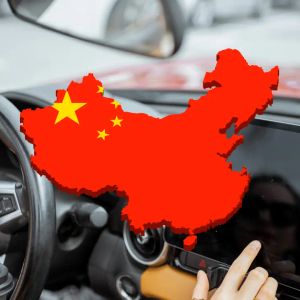
China’s electric vehicle industry is facing a fresh challenge this week as car trade-in subsidies from several of its major cities dry up. As government subsidies dry up in several of China’s cities, the electric vehicle industry is already feeling the ripple effects on its retail sales. According to official announcements reviewed by Reuters , at least six municipalities, including Zhengzhou, Luoyang, Shenyang, Chongqing, and Xinjiang, have temporarily suspended their car trade-in subsidy programs after the initial round of funding ran out. Chinese retail sales saw an unexpected 6.4% jump in May, with partial credit to auto subsidies. Analysts now fear that this pause in subsidy programs could dampen both consumer demand and business confidence heading into the third quarter. Chinese EV makers hit with subsidy freeze Electric vehicle (EV) manufacturers in China are facing a new challenge as key government subsidies have suddenly been frozen in several major cities. City governments have offered differing reasons for the freeze. In Zhengzhou and Luoyang, the officials blamed depleted central funds for the suspension, while authorities in Shenyang and Chongqing described their pauses as part of “adjustments to improve capital efficiency.” Xinjiang also confirmed a halt, though without elaborating on the reason. The national subsidy scheme encourages consumers to trade in their older vehicles for newer, more efficient models, and it has been a pillar of Beijing’s strategy to increase consumption despite sluggish economic indicators like soft wage growth, persistent youth unemployment, and a deeply troubled property sector. The Ministry of Commerce reported that more than 4 million applications for car-specific trade-in subsidies had been filed by the end of May. “Zero-mileage” fraud may slow down Despite the program’s popularity, problems have emerged around its implementation and potential abuse. One of the most significant issues that was flagged by local regulators and state media involves what are called “zero-mileage used cars” which are brand new vehicles misrepresented as used ones in order to qualify for trade-in subsidies. This loophole has reportedly been exploited by dealerships and manufacturers seeking to clear inventory at discount rates. According to Dahe Daily, a government-owned publication in Henan Province, businesses were repackaging new or barely-used vehicles as second-hand ones to secure state funds under false pretenses. The practice gained national attention after Wei Jianjun, the chairman of Great Wall Motor, publicly condemned it. China’s central government took the criticism seriously, and the state-run paper, People’s Daily, published a piece in early June urging a crackdown on the scheme. Soon after that, the Ministry of Industry and Information Technology (MIIT) called for an emergency meeting with auto companies to put an end to price wars and market manipulation. During the meeting, regulators warned against over-reliance on discounts and subsidies to drive sales. Afterwards, major automakers, including BYD and Nio, engaged in repeated rounds of price cuts that threatened the industry’s long-term profitability. So far, there’s been no formal announcement on when additional funds will be released, but both the National Development and Reform Commission (NDRC) and the Ministry of Finance have stated that subsidy programs will continue through the end of 2025. Analysts are anticipating a fresh round of central funds as early as July. Cryptopolitan Academy: Want to grow your money in 2025? Learn how to do it with DeFi in our upcoming webclass. Save Your Spot