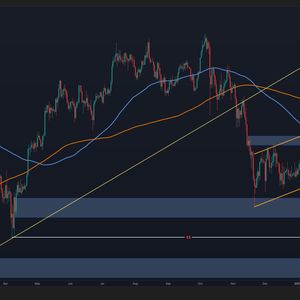
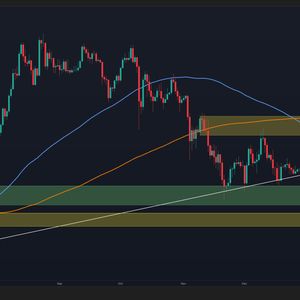
BitcoinWorld Bitcoin Price Plummets Below $82,000: Analyzing the Sudden Market Shift Global cryptocurrency markets experienced significant movement on Thursday, March 13, 2025, as Bitcoin’s price fell below the critical $82,000 threshold. According to real-time data from Bitcoin World market monitoring, BTC currently trades at $81,957.71 on the Binance USDT market. This development marks a notable shift in the digital asset’s recent performance trajectory, prompting analysis from financial observers worldwide. Bitcoin Price Movement Analysis Market data reveals Bitcoin’s descent below $82,000 represents a 4.2% decline from its weekly high of $85,400. Trading volume increased by 18% during this movement, indicating heightened market activity. The Binance USDT pair shows consistent selling pressure across Asian and European trading sessions. Historical data from CoinMarketCap indicates similar price levels last occurred approximately three weeks ago. Several factors potentially contribute to this price movement. First, traditional market correlations show sensitivity to Federal Reserve policy announcements. Second, blockchain analytics firm Chainalysis reports increased exchange inflows preceding the decline. Third, regulatory developments in major economies continue influencing investor sentiment. Market analysts note these elements often interact in complex ways. Cryptocurrency Market Context The broader digital asset market reflects Bitcoin’s movement with notable precision. Ethereum declined 3.8% to $4,210 during the same period. Major altcoins including Solana and Cardano showed similar downward trajectories. Total cryptocurrency market capitalization decreased by approximately $120 billion within 24 hours. This synchronized movement demonstrates Bitcoin’s continuing role as market leader. Institutional investment patterns reveal interesting contrasts. Grayscale Bitcoin Trust reported net outflows of $45 million yesterday. Conversely, BlackRock’s iShares Bitcoin ETF maintained stable holdings. This divergence suggests different investor strategies during volatility periods. Market microstructure analysis shows algorithmic trading contributed significantly to price momentum. Recent Bitcoin Price Levels (March 2025) Date Price High Price Low 24h Volume March 10 $84,200 $82,800 $28.4B March 11 $85,400 $83,100 $31.2B March 12 $83,900 $82,300 $29.8B March 13 $82,500 $81,800 $34.7B Technical Analysis Perspective Technical indicators provide additional context for this price movement. The 50-day moving average currently sits at $80,200, while the 200-day average remains at $72,400. Relative Strength Index (RSI) readings dropped to 42, indicating neither overbought nor oversold conditions. Fibonacci retracement levels suggest potential support around $80,500. These metrics help traders assess possible future movements. On-chain metrics from Glassnode offer complementary insights. Bitcoin’s Network Value to Transactions (NVT) ratio increased slightly, suggesting valuation may outpace transaction volume. Miner revenue remains stable despite the price decline. Exchange reserves show modest decreases, indicating some investors moved assets to cold storage. These fundamental factors provide crucial market context. Historical Volatility Patterns Bitcoin’s current volatility aligns with historical patterns observed since 2020. Analysis of annualized volatility shows current levels at 68%, compared to the 2024 average of 72%. The cryptocurrency typically experiences 5-7% weekly price movements as normal market behavior. Previous instances of crossing psychological price levels like $82,000 often preceded consolidation periods. Comparative analysis with traditional assets reveals important distinctions. Gold volatility measures approximately 15% annually, while major stock indices typically show 18-22% volatility. Bitcoin’s higher volatility reflects its developing market structure and different adoption timeline. However, volatility has decreased gradually as institutional participation increased. Market Liquidity: Order book depth remains robust across major exchanges Derivatives Activity: Open interest in futures markets decreased by 8% Options Positioning: Put/call ratio shifted toward protective positions Institutional Flow: Corporate treasury purchases continued at reduced pace Global Economic Factors Macroeconomic conditions significantly influence cryptocurrency markets. Recent Federal Reserve statements regarding interest rate policy affected risk assets globally. Dollar strength inversely correlated with Bitcoin’s price movement yesterday. Additionally, geopolitical developments contributed to risk-off sentiment across financial markets. These external factors often amplify cryptocurrency volatility. Regional adoption patterns show interesting developments despite price movements. El Salvador continued its scheduled Bitcoin purchases yesterday. Several European nations advanced digital asset regulatory frameworks. Asian markets demonstrated mixed responses, with Japan showing increased retail interest. These fundamental adoption trends continue regardless of short-term price action. Market Structure Evolution Cryptocurrency market infrastructure has evolved significantly since 2023. Institutional custody solutions now safeguard over $150 billion in digital assets. Regulatory clarity improved in multiple jurisdictions, though challenges remain. Trading venue reliability increased following several exchange consolidations. These structural improvements help markets absorb volatility more efficiently. Technological developments continue supporting Bitcoin’s network fundamentals. The Lightning Network now processes over $100 million daily. Taproot adoption increased transaction efficiency and privacy. Mining difficulty adjustments maintained network security despite price fluctuations. These technological advancements strengthen Bitcoin’s long-term value proposition. Investor Behavior Analysis Different investor cohorts demonstrated varied responses to the price movement. Long-term holders (holding >1 year) showed minimal selling activity according to on-chain data. Short-term traders increased position turnover by approximately 22%. Institutional investors rebalanced portfolios but maintained strategic allocations. Retail interest measured by search volume increased 15% following the decline. Psychological factors play crucial roles during price movements. The $82,000 level represented a psychological support zone for many traders. Breakthrough of such levels often triggers automated selling from algorithmic systems. However, experienced investors typically view these movements as normal market behavior. Historical patterns suggest consolidation often follows significant price movements. Conclusion Bitcoin’s decline below $82,000 represents a significant market development with multiple contributing factors. The current price of $81,957.71 reflects normal volatility within cryptocurrency markets. Technical indicators suggest potential support levels while fundamental adoption continues progressing. Market structure improvements help absorb volatility more effectively than previous cycles. Bitcoin price movements warrant careful analysis but remain consistent with historical patterns in developing asset classes. FAQs Q1: What caused Bitcoin to fall below $82,000? Multiple factors contributed including traditional market correlations, regulatory developments, and technical selling pressure. Increased exchange inflows and broader market sentiment also played roles. Q2: How does this price movement compare to historical Bitcoin volatility? Current volatility measures approximately 68% annually, slightly below 2024’s average of 72%. Weekly movements of 5-7% represent normal market behavior for Bitcoin. Q3: What are key support levels to watch following this decline? Technical analysis suggests potential support around $80,500 based on Fibonacci levels. The 50-day moving average at $80,200 provides additional reference. Q4: How did other cryptocurrencies respond to Bitcoin’s movement? Major altcoins including Ethereum, Solana, and Cardano showed correlated declines of 3-5%. Total cryptocurrency market capitalization decreased approximately $120 billion. Q5: What does on-chain data reveal about investor behavior during this decline? On-chain metrics show long-term holders maintained positions while short-term trading increased. Exchange reserves decreased slightly as some investors moved to cold storage. This post Bitcoin Price Plummets Below $82,000: Analyzing the Sudden Market Shift first appeared on BitcoinWorld .