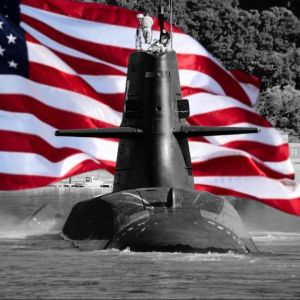
Industries are competing to be the recipients of the underwater defense spending spree from nations facing maritime threats. Defense companies, technology start-ups, and marine contractors are positioning themselves for a wave of new government spending on underwater defense, as nations are stepping up efforts to safeguard their seabed infrastructure and maritime assets. Governments make moves to bolster coastal defense Growing concerns about the vulnerability of undersea pipelines, cables, and shipping routes have prompted military planners to rethink traditional naval strategies. The United States has already tightened subsea cable regulations through the Federal Communications Commission, while the United Kingdom highlighted maritime security as a core priority in its latest strategic review. Analysts have warned that traditional anti-submarine methods, which are reliant on patrol aircraft and frigates, are increasingly costly and insufficient in addressing the threat. “The effort to maintain situational awareness underwater and track relatively elusive targets is not something navies are strangers to,” Sid Kaushal, a naval warfare expert at the Royal United Services Institute, said . “But the challenge now is one of scale and how to scale [your] capabilities.” Industry attempts to seize new opportunities The scale of the challenge has created opportunities for defense companies and emerging technology groups. A central initiative is NATO’s “Digital Ocean Vision,” which seeks to integrate satellites, autonomous systems, and advanced analytics to strengthen surveillance and decision-making across the sea, above and below the surface. Europe’s largest shipbuilder, Fincantieri, expects the global defense and commercial underwater market to grow to €50B annually, predicting its own underwater division will double in size to €820M by 2027. Brett Phaneuf, the chief executive of MSubs, highlighted the role of high-performance computing in enabling new designs, saying, “The proliferation and the cost reduction of really sophisticated high-performance computing systems and micro electronics … have made things possible that had not been possible for decades in terms of miniaturisation, power utilisation and processing capability.” MSubs recently developed Excalibur, a 12-meter-long uncrewed submarine undergoing trials with the Royal Navy. The vessel, the largest of its kind tested by the Navy, is designed to accelerate the adoption of advanced autonomous technologies at sea. Similarly, BAE Systems has unveiled Herne, a modular autonomous underwater vehicle offering extended range and endurance. “You can’t have a bad day. The systems have to be resilient and work when needed.” Dave Quick, the head of underwater weapons at BAE, said. Helsing, a European defense technology company, is building a factory in Plymouth to produce its SG-1 Fathom autonomous gliders. They are designed to be monitored by a single operator at a fraction of the cost of manned patrols. The AI-powered gliders will form part of a collaborative project with Blue Ocean Marine Tech Systems, Ocean Infinity, and defence group Qinetiq. The company aims to deploy the system within 12 months. The U.S.-based Anduril is also expanding in the UK. Its British subsidiary has partnered with Sonardyne and Ultra Maritime to launch Seabed Sentry, a real-time autonomous sensing system that deploys low-cost “sensor nodes” across the seabed. When combined with Ultra’s Sea Spear sonar system, the network acts as a digital tripwire to detect hostile underwater activity. “We’re all about getting something in the water. It’s a software approach to hardware.” Richard Drake, the general manager of Anduril UK, stated. Thales, which has long provided sonar systems for the Royal Navy, is pursuing Project Cabot. Project Cabot is an initiative to combine crewed and uncrewed vehicles for anti-submarine warfare. According to Thales executive Ian McFarlane, the project is not only about sensors but also about managing vast amounts of data. “The aim is as much about handling the data that is collected through sensors and other means as well as transferring it into usable information and presenting it in such a way that people understand what they are looking at.” Get up to $30,050 in trading rewards when you join Bybit today