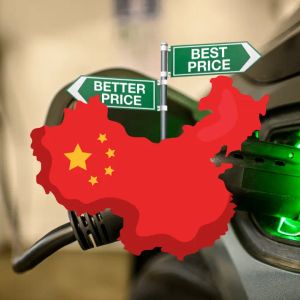
China’s cabinet unveiled a pair of measures this week aimed at steadying its electric vehicle sector. At a State Council meeting on Wednesday, July 16, Premier Li Qiang called for an end to “irrational competition” in the domestic market. Separately, the Commerce Ministry said it would impose new export rules on key battery technologies to safeguard China’s lead in the field. During the State Council meeting on July 16, officials pledged to rein in “ irrational competition ” across China’s EV industry. They vowed to enforce market order and to increase efforts to monitor prices, according to state media. The session stressed that firms should focus on innovation and product quality rather than resort to deep discounts. Authorities also said they would monitor the sector closely to maintain stability. State broadcaster China Central Television carried the report. CCTV noted officials offered no details about their plans to support innovation or quality improvements. The move follows top-party directives to temper aggressive price slashing among EV makers. While the world’s second-largest economy is on track to meet its official 5% goal for expansion in 2025, officials warned a steep drop in prices could slow the growth. In April, BYD Co. sold a higher number of EVs in Europe than Tesla, for the first time, according to industry figures. Due to this success, tensions increased with the United States and the European Union, which have cautioned that a flood of cheaper Chinese vehicles could harm their domestic auto sectors. Last month, Beijing summoned the chief executives of large EV companies, including BYD, and urged them to “self‑regulate” by avoiding unjust price reductions. China is making significant advances in vehicle battery technology In a separate announcement on July 15, the Commerce Ministry said any overseas transfer of eight key battery manufacturing technologies would require a government license. The rule applies to exports via trade, investment, or technical partnerships and takes effect immediately. Officials said the measure could cement China’s leading position in EV battery production and discourage Chinese automakers from establishing factories abroad. Chinese firms have made significant breakthroughs in battery design over the last 5 years, cutting costs while extending driving range. The latest generation of lithium‑ion cells relies on iron and phosphate, a cheaper and safer mix compared with nickel, cobalt, and manganese blends. These batteries sit at the heart of China’s ability to build electric vehicles at prices below those of many petrol and rival EV models overseas. The EU has pressed Chinese battery and car producers to establish factories within its borders, a condition for constant sales growth. The US is more cautious but is reviewing plans for two Chinese battery plants in Michigan. If approved, those plants would be among the first major Chinese battery facilities in the United States. These new battery export rules come almost 3 months after Beijing introduced export licenses for seven rare earths and magnets. This move has already shaken Western and Japanese firms that rely on those materials for robots, advanced electric motors, and cars. Shenzhen-based BYD, which overtook Tesla recently as the world’s largest electric car manufacturer, unveiled its lithium iron phosphate (LFP) battery 5 years ago, replacing expensive NCM with phosphate and iron to reduce fire risks. Rival Contemporary Amperex Technology Co. Limited (CATL) in Ningde unveiled a similar design shortly after. In comparison, companies from South Korea, Germany, Japan, and the United States still mainly rely on NCM batteries. Cryptopolitan Academy: Want to grow your money in 2025? Learn how to do it with DeFi in our upcoming webclass. Save Your Spot