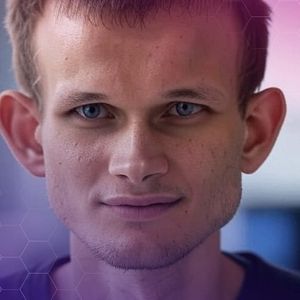
BitcoinWorld Vitalik Buterin’s Urgent Call: Decentralized Social Apps Are Critical to Prevent Crypto Speculation In a pivotal interview with Foresight News, Ethereum founder Vitalik Buterin issued a compelling directive to the global developer community. He emphasized the immediate need for more decentralized social applications, a move he believes is crucial for steering the cryptocurrency industry away from becoming a purely speculative market. This call to action, delivered in early 2025, outlines a strategic vision for Ethereum’s evolution and the broader Web3 ecosystem. Vitalik Buterin’s Three-Pronged Vision for Ethereum’s Future Buterin’s analysis presents a clear roadmap built on three foundational pillars. First, he identifies the persistent risk of the crypto space devolving into mere speculation. Consequently, he advocates for building tangible utility through decentralized social (DeSoc) platforms. Second, he stresses the necessity for continuous technological improvement on the Ethereum network. Finally, he warns of a potential future dominated by centralized artificial intelligence, a scenario decentralized networks could help avert. Industry analysts have long tracked the volatility of crypto markets. For instance, data from CoinMarketCap in 2024 showed that over 70% of trading volume was attributed to speculative assets without clear utility. Buterin’s perspective, therefore, shifts the focus from financialization to functionalization. He envisions applications where blockchain’s value is derived from daily use, not just price appreciation. The Mechanics and Promise of Decentralized Social Applications Decentralized social applications operate on fundamental principles distinct from traditional platforms like Facebook or X. They leverage blockchain technology to return data ownership and control to users. Importantly, these platforms resist censorship and eliminate centralized points of failure. Developers build them using open-source protocols, often on networks like Ethereum. Key characteristics of DeSoc apps include: User-Controlled Identity: Digital identities are portable and self-sovereign. Data Ownership: Users own their content and social graphs. Token-Incentivized Curation: Communities use tokens to govern and reward quality content. Interoperability: Applications can communicate across different protocols. Existing projects like Lens Protocol and Farcaster demonstrate early viability. They provide the social graph infrastructure upon which developers can build diverse applications. These platforms have seen steady user growth, suggesting a market ready for Buterin’s proposed expansion. Expert Analysis on Speculation Versus Utility Dr. Anya Petrova, a blockchain economist at MIT’s Digital Currency Initiative, supports Buterin’s thesis. “The 2022-2024 market cycle revealed a critical weakness,” she notes. “Projects without real-world utility experienced catastrophic declines, while those with active users demonstrated resilience.” Her research indicates that networks with over 10,000 daily active non-speculative users had 40% less price volatility during market downturns. This evidence underscores the economic logic behind Buterin’s push. Decentralized social networks create sustainable demand for network resources like gas fees and storage. This demand is inherently less cyclical than speculative trading. Furthermore, they drive innovation in scalability solutions, directly addressing Buterin’s second point about technological improvement. The Rise of Smart DAOs with Sophisticated Structures Buterin’s anticipation of advanced smart DAOs (Decentralized Autonomous Organizations) complements the DeSoc vision. Early DAOs often struggled with inefficient governance and security flaws. The next generation, or “smart DAOs,” will likely employ more complex, modular structures. DAO Generation Key Features Primary Use Case First (2020-2023) Simple token voting, multisig treasuries Protocol governance, investment pooling Next-Gen “Smart” DAOs Futarchy, delegated expertise, sub-DAOs, AI-assisted analysis Operating complex social platforms, managing public goods funding These entities could manage the backend operations of large-scale social networks. They would handle content moderation disputes, allocate development grants, and manage treasury assets. This structure distributes power and aligns incentives among stakeholders, creating a more robust and fair digital public square. Countering the Centralized AI Threat with Decentralized Networks Buterin’s third reason touches on a dominant 2025 technological concern: centralized AI control. Major AI labs currently control vast datasets and computational resources. A decentralized social ecosystem, built on transparent protocols, can serve as a counterbalance. It can foster the development of open-source AI models trained on diverse, user-permissioned data. Projects like Ocean Protocol already enable data marketplaces on blockchain. In a DeSoc context, users could choose to contribute their data to train community-owned AI models. This model creates an alternative to the “data extraction” paradigm of Web2 giants. The integration of zero-knowledge proofs could further enhance privacy within these systems. Technological timelines suggest this is not a distant future. The Ethereum roadmap, including upgrades like danksharding and verkle trees, aims to reduce transaction costs by over 100x. This scalability is a prerequisite for hosting data-intensive social and AI applications. Buterin’s call, therefore, aligns development priorities with infrastructure capabilities. Conclusion Vitalik Buterin’s interview provides a coherent strategic framework for the next phase of Web3. His emphasis on decentralized social applications addresses the critical need to move beyond crypto speculation. By championing utility, technological rigor, and decentralized governance, he charts a course toward a more resilient and equitable digital future. The success of this vision now depends on the developer community’s response to build the foundational tools and applications that will define the internet’s next era. FAQs Q1: What are decentralized social (DeSoc) applications? Decentralized social applications are platforms built on blockchain networks that allow users to own their data and identity. Unlike traditional social media, they operate without a central controlling company, using open-source protocols and often community governance. Q2: Why does Vitalik Buterin think DeSoc apps can reduce crypto speculation? Buterin believes these apps create real, daily utility for blockchain technology. When people use networks for social interaction, content creation, and community building, it generates demand based on use, not just financial trading. This utility-driven demand can stabilize the ecosystem. Q3: What is a “smart DAO” and how is it different? A smart DAO refers to a next-generation Decentralized Autonomous Organization with advanced governance structures. It may use systems like futarchy (decision markets), delegate expertise models, and AI tools for proposal analysis, making it more efficient and capable than early, simple token-voting DAOs. Q4: How can decentralized networks prevent dominance by centralized AI? Decentralized networks can host and incentivize the development of open-source AI models. Users can contribute their own data voluntarily to train these models, creating an alternative to the closed, data-hoarding models of large AI corporations. This fosters transparency and diversity in AI development. Q5: Are there any working examples of DeSoc apps today? Yes, several protocols are live. Examples include Lens Protocol, a composable social graph on Polygon, and Farcaster, a sufficiently decentralized social network. These platforms allow developers to build various social applications (like clients for blogging or video) on top of a shared user base. This post Vitalik Buterin’s Urgent Call: Decentralized Social Apps Are Critical to Prevent Crypto Speculation first appeared on BitcoinWorld .