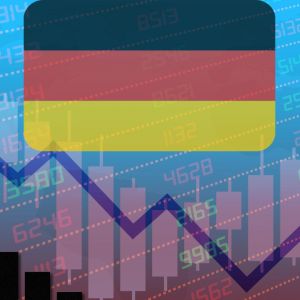
Germany’s economy started the new year without much energy, as a closely watched measure of business confidence held steady in January while the country’s biggest labor union warned it will ramp up fights with major carmakers over cost reductions and job losses. The Ifo Institute in Munich said Monday its business climate reading stayed at 87.6 points this month, unchanged from December and below what economists had predicted. Around 9,000 companies answer the monthly survey. Analysts polled by The Wall Street Journal had expected the number to climb to 88.0. “The German economy is starting the new year with little momentum,” Clemens Fuest, who leads the Ifo Institute, said in a statement. The flat reading comes as IG Metall, Germany’s most powerful autoworker union, said it would increase pressure on companies like Volkswagen and Mercedes-Benz if they keep pushing cost cuts and moving work to other countries. The union is getting ready for wage talks in the metal and electrical engineering sector later this year, with tough negotiations expected around autumn. Nadine Boguslawski, the head treasurer at IG Metall who sits on the boards of Mercedes and major parts maker Robert Bosch, spoke Monday at the union’s yearly press meeting. “We are prepared to take a stand against corporate strategies that prioritize profits and then resort to circumventing collective agreements and relocating abroad,” she said. “The driving force behind the economic upturn in 2026 will be employees and their incomes.” The union and carmakers will face off as the industry deals with tougher competition in China and from Chinese companies, the effects of American tariffs , and slower-than-hoped demand for electric cars. Worker representatives hold unusual power at big German companies. They get half the seats on supervisory boards, which lets them shape and even stop major company plans. Germany’s car industry had a rough year marked by warnings about lower profits and restructuring plans. Manufacturers pulled back on electric vehicle programs because fewer people bought them than expected. Companies have announced job cuts that will eliminate close to 100,000 positions by 2030, with Bosch cutting the most. Some cost-cutting shows results Some recent cost-cutting has shown results. Volkswagen said last week it had better-than-expected cash flow from its car business in 2025. Most of that came from putting off investments. Parts supplier ZF Friedrichshafen also reported stronger cash flow after customers canceled several electric car projects. While companies resize their plans, competition from Chinese carmakers like BYD keeps growing both in China, the world’s largest car market, and through cars shipped into Europe. German car production has been stuck at the same level for three straight years, staying well under where it was before the crisis. Production in 2025 was about 11% lower than in 2019. IG Metall says any government help for the industry should benefit workers in Germany. Union chair Christiane Benner said she wants “a clear commitment against relocations, site closures and layoffs — immediately,” according to a statement from the union. The business climate reading stayed flat even though the government rolled out stimulus programs. Confidence had picked up at the start of last year after German officials promised up to around one trillion dollars in spending for the country’s roads, bridges, and military. But that confidence stopped growing after summer when higher American tariffs began affecting businesses, and worries increased about how fast the stimulus money would actually reach companies. “The unchanged Ifo index reflects the uncertainty that has hit the German economy again on the back of geopolitical tensions and tariff threats,” Carsten Brzeski at ING said. Confidence likely took another hit in January after President Trump threatened to put extra tariffs on several European nations, including Germany, because they would not agree to a deal for the United States to “acquire” Greenland. Brzeski said people should not read too much into the Ifo number. It is not clear if most companies answered the survey before or after President Trump backed away from the additional tariff threats. The index showed the assessment of how things are right now went up slightly, while expectations for the future dropped a bit. By sector, the business climate got much better in manufacturing but got worse in services. Sentiment also went up in trade and construction, the Ifo Institute said. Signs of economic recovery emerge Information released earlier this month showed the German economy returned to growth last year for the first time since 2022, with output helped by more investment in the final three months of the year. Investor confidence jumped in January to its highest point since July 2021, based on the ZEW Indicator of Economic Sentiment, while purchasing managers’ indexes also improved. Factory data also points to a solid comeback in the industrial sector, which should get stronger as stimulus money starts flowing through the economy more quickly this year, Brzeski added. But Germany should not become too comfortable. The country needs major reforms to make sure growth bounces back and stays strong. “It is up to German Chancellor Friedrich Merz and his government to implement these reforms this year and turn a long-awaited rebound into a sustainable recovery,” Brzeski said. Don’t just read crypto news. Understand it. Subscribe to our newsletter. It's free .