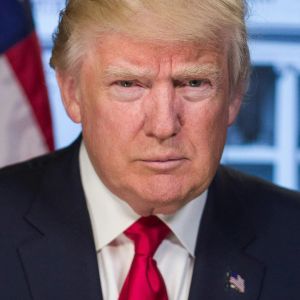
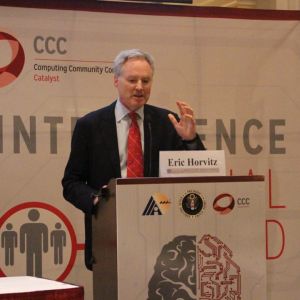
A top executive at Microsoft has raised concerns that recent cuts to government funding for university research in America could push the country behind its competitors in the race to develop artificial intelligence. Eric Horvitz, who holds the position of chief scientist at Microsoft, shared his worries with the Financial Times about President Donald Trump’s choice to reduce money flowing to academic research programs. According to Horvitz, this approach might help other countries like China get ahead in science and technology development. Rare public stance from tech executive “I personally find it hard to see the logic of trying to compete with competitor nations at the same time as making these cuts,” Horvitz said. His comments arrive at a time when American universities and government agencies have seen their budgets slashed by billions of dollars since Trump entered office last year. Officials have defended these reductions as necessary steps to lower spending or as part of political positions, including stopping money for programs focused on diversity. Many scientists and professors have spoken out against the Trump administration’s approach to research funding, but Horvitz stands out as one of the few high-ranking business leaders willing to criticize these policies in public. Large technology companies have mostly tried to stay on good terms with Trump. Microsoft itself gave money to the president’s inauguration committee and his plan to construct a new ballroom at the White House. Still, Horvitz, who has worked at Microsoft for years and became the company’s first chief scientific officer in 2020, pointed to the system put in place after World War II as a successful model for backing university research. Back in 1950, the United States established the National Science Foundation, known as NSF. This agency now handles more than a quarter of all federal money that American colleges and universities get for basic research work. “That vision turned out to be an impressive way to make an investment in the future,” said Horvitz, noting that without help from the government, the US would be “decades away” from today’s AI “moment.” “By betting on intellect and ideas, we can make the world better in surprising ways,” he added. Trump has canceled more than 1,600 NSF grants worth nearly $1 billion in funding since 2025. Past research grants led to today’s AI advances Horvitz has teamed up with Margaret Martonosi, who teaches at Princeton University and previously led computer science efforts at NSF, to gather stories showing how federal money for research has sparked major scientific discoveries. Several winners of the Turing Award, a prestigious honor in computer science, wrote articles for the December issue of the Association for Computing Machinery magazine to help people understand how tax dollars have contributed to important technological advances. One case involves last year’s winners, Andrew Barto and Richard Sutton, who are recognized for creating reinforcement learning. This method is now used by the world’s leading AI companies, including OpenAI , Google and Microsoft, when they train their systems. “The core ideas behind these large-scale language models, multimodal models, were developed . . . by people pursuing questions about intelligence, of the type you only see in discussions at universities,” said Horvitz. Martonosi, whose work has led to important developments in the semiconductor field, explained that research findings often end up being used by companies. “I’ve had patents licensed by major chip vendors and watched my ideas go out in almost every laptop out there,” she said. The funding reductions and freezes have pushed academic institutions to make major changes to how they operate and manage their money. Some professors and students have decided to move abroad as a result. Critics worry these steps will help competing superpowers like China , where researchers already produce cutting-edge work with significant support from their government. Many researchers have also looked for jobs in private companies, attracted by the considerable resources these firms can offer, including sophisticated tools and access to hard-to-get computing power. “Other countries are following what was a very unique American model,” said Horvitz. “If we don’t follow that model, the talent magnet, the training and the curiosity-driven investments will happen elsewhere. More than they do here.” The smartest crypto minds already read our newsletter. Want in? Join them .
 Will Bitcoin Hold Steady This Weekend?