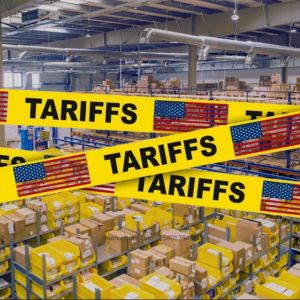
U.S. companies are increasingly turning to federally regulated bonded warehouses to dodge the expense of importing goods under escalating levies imposed by President Trump. Bonded warehouses, run by U.S. Customs and Border Protection, let importers wait to pay tariffs until the goods are ready to enter the U.S. market. Until the shipment leaves the warehouse, it isn’t counted as an import and no duties are due. “Think of it like the zone in an airport where you have gotten your suitcase but not yet gone through the ‘Declare/Nothing to Declare’ lines,” Fox Business quoted Tim Hruby, an international trade attorney at Blank Rome. He added, “Goods can be unloaded from a ship, airplane, etc., and kept in a bonded warehouse until the importer is ready to clear customs,” noting that companies still pay storage fees. There are over 1,700 such bonded locations nationwide, often located near to key ports and air hubs. “They’re not tariff-free bubbles exactly,” said Deborah Elms, head of trade policy at the Hinrich Foundation, a Singapore-based research firm. Elms noted that duty assessments occur upon removal of goods from storage, postponing the upfront payment obligation. Elms contends that such arrangements afford companies increased operational leeway. By using these facilities, firms can optimize supply chains, stagger duty outlays, and retain liquidity for an extended period. During storage, companies have the opportunity to track shifting tariff levels and regulatory changes. Should levies increase, the shipment can remain in holding. Conversely, declines in tariffs may prompt importers to clear the goods for domestic distribution.As an illustration, a U.S. glass importer arriving from Germany could store its freight at a port-adjacent facility. The firm might postpone entry untileither tariffsease or an exemption becomes available. Shipments may remain in bonded status for as long as five years. This storage method accommodates diverse merchandise—from input materials and completed goods to certain regulated hazardous items. What risks are involved in bonded warehouses? “This is a gamble, of course, as rates might also increase, leading to even higher tariff payments,” Elms warned. When asked why more U.S. businesses do not use bonded warehouses, Elms noted that regulated storage comes at a cost. “Bonded warehouses are also more expensive, as they function as a customs-controlled environment which requires greater monitoring,” she said, adding that some facilities are smaller, so firms cannot stockpile large amounts. President Trump recently proposed a 30% tariff on imports from Mexico and the 27 EU countries. They build on earlier duties, 50% on copper and Brazilian exports, 35% on Canadian imports, plus additional tariffs covering over 20 other nations. These 30% duties begin on August 1. According to Treasury data, these tariffs have already produced upwards of $100 billion in revenue this year. June collections exceeded $27 billion in customs duties, marking the peak month of 2025. This amount represents a 301% increase over June 2024’s total. Although the White House celebrates the boost in tariff receipts, the elevated import costs fall on businesses, and may eventually translate into steeper prices for buyers. Cryptopolitan Academy: Coming Soon - A New Way to Earn Passive Income with DeFi in 2025. Learn More